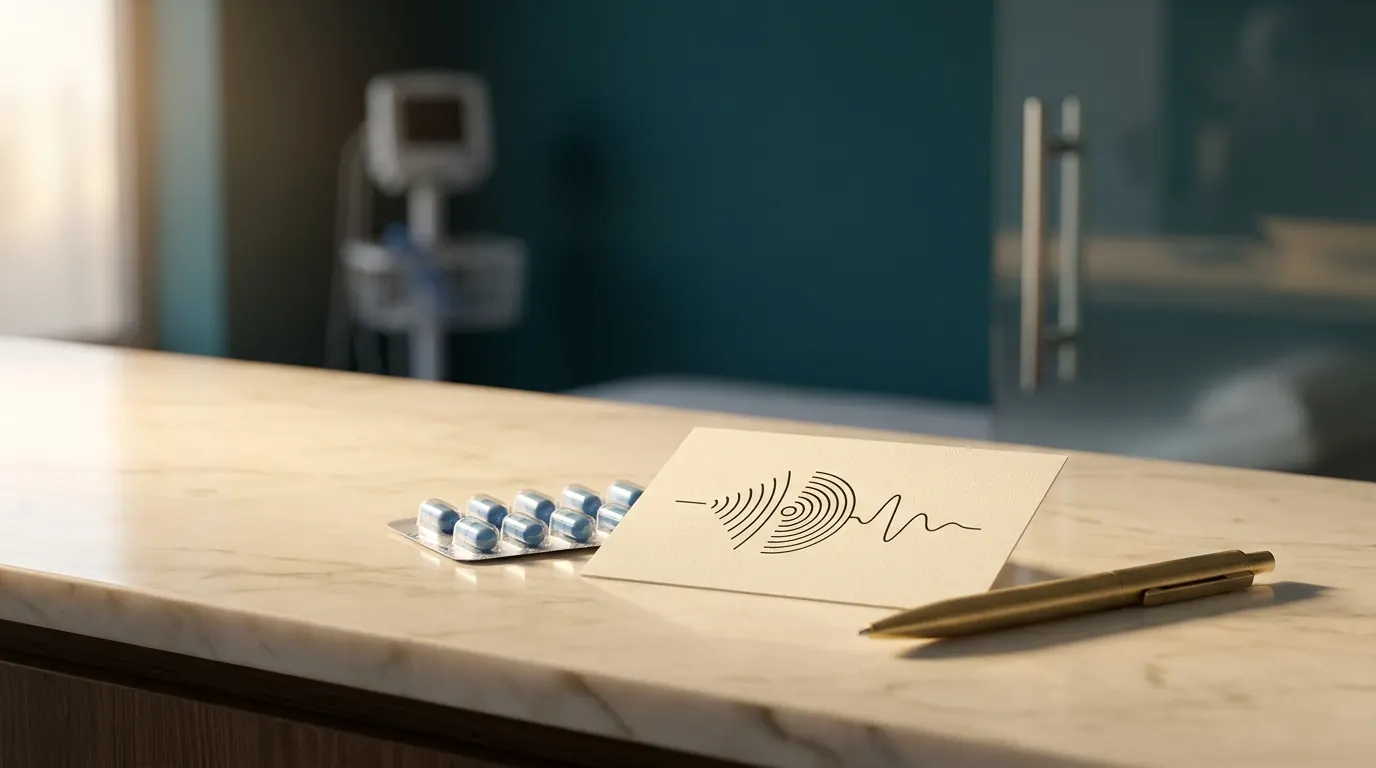
Two different mechanisms — not two competing brands
The most useful reframe to start with: Viagra and shockwave therapy are not in the same category. PDE5 inhibitors (the drug class that includes Viagra/sildenafil, Cialis/tadalafil, Levitra/vardenafil, and Stendra/avanafil) are vasodilators — they help blood vessels relax during sexual stimulation so that the existing erectile tissue can fill with blood. They are taken before sex; they wear off; each dose is a separate event.
Focused low-intensity shockwave therapy (Li-ESWT) is a regenerative therapy. It delivers low-intensity acoustic pulses to penile tissue across multiple sessions, triggering the release of vascular endothelial growth factor (VEGF), recruiting endothelial progenitor cells, and stimulating the formation of new microvessels. The clinical claim is that shockwave changes the underlying vascular health of erectile tissue, rather than helping you work around existing impairment for an hour.
Pills are a workaround. Shockwave is a repair. Whether you want a workaround or a repair depends on which problem you're solving.
Direct head-to-head comparison
Here is the realistic comparison Filipino clinicians make when a patient asks which they should consider first:
| Variable | PDE5 inhibitors (Viagra/Cialis/Levitra) | Focused shockwave (Li-ESWT) |
|---|---|---|
| Mechanism | Vasodilator — helps existing tissue work | Regenerative — stimulates new blood vessels |
| Onset | 30–60 minutes per dose | 3–6 sessions before noticeable change |
| Duration of effect | 4 hours (sildenafil) to 36 hours (tadalafil) per dose | 12–24 months per course on average |
| Treats underlying cause | No | Yes (vascular regeneration) |
| Response rate | 70–80% in vasculogenic ED | 65–75% responder rate in published meta-analyses |
| Side effects | Headache, flushing, indigestion, visual changes, rare priapism | Mild transient tenderness; rare bruising |
| Drug interactions | Significant — especially nitrates, alpha-blockers | None (non-pharmacological) |
| Daily commitment | Per-dose, before sex | None after course completion |
| Cost per encounter (PH) | ₱40–₱500 (generic to branded) | N/A — course-based |
| Cost per course / year (PH) | ₱25,000–₱80,000+/year if used weekly | ₱30,000–₱56,000 one-time, 12–24 month effect |
| Spontaneity | Pre-planned (30–60 min before, longer for Cialis) | Restored over time |
Which is right for you — by clinical pattern
Different patients are well served by different starting points. The clinical patterns we see most often:
- Younger man (under 45), occasional difficulty, no cardiovascular risk factors: PDE5 inhibitors are often the right first step. The ED may be situational, stress-related, or related to a specific relationship dynamic; pills work well and a regenerative therapy may not be needed.
- Man over 45, gradual decline over months/years, presence of vascular risk factors (hypertension, diabetes, smoking history, dyslipidemia): shockwave is the more durable answer because it addresses what's actually happening — small-artery vascular aging in the penile tissue.
- Man currently on PDE5 inhibitors but needing higher doses or seeing diminishing returns: shockwave is a strong consideration. Many patients in this pattern report being able to taper down pill doses after a shockwave course.
- Severe ED, multiple cardiovascular risk factors, post-radical-prostatectomy: combination therapy (shockwave + PDE5 inhibitors during and after the course) has the strongest evidence in recent meta-analyses.
- Patient with cardiovascular disease on nitrates (e.g., for angina): PDE5 inhibitors are contraindicated. Shockwave becomes the pharmacological-alternative option, with appropriate cardiac clearance.
- Patient who prefers not to medicate or has experienced side effects from PDE5 inhibitors: shockwave is the non-pharmacological alternative.
PDE5 inhibitor availability and pricing in the Philippines
The Philippine market has all four FDA-approved PDE5 inhibitors. Branded Viagra (sildenafil) is the most-recognised but is no longer the most-prescribed in clinical practice — generic sildenafil from Philippine manufacturers has the same active ingredient at a fraction of the price. Approximate per-pill costs as of 2026:
| Medication | Typical PH price per pill | Notes |
|---|---|---|
| Sildenafil generic 50mg (Unilab, Pfizer Lloyd, etc.) | ₱40–₱120 | Most commonly prescribed; needs prescription |
| Sildenafil branded (Viagra) 50mg | ₱350–₱500 | Same active ingredient as generic |
| Tadalafil generic 20mg | ₱60–₱180 | 36-hour duration; flexible timing |
| Tadalafil branded (Cialis) 20mg | ₱400–₱600 | Same active ingredient as generic |
| Vardenafil (Levitra) 20mg | ₱400–₱500 | Less common; similar profile to sildenafil |
| Avanafil (Stendra) 100mg | ₱500+ | Newest; fastest onset (~15 min); least commonly stocked in PH |
Combination is increasingly the answer
Recent meta-analyses (Sun et al. 2019 onward) and clinical guidance from the European Society of Sexual Medicine support combination protocols — running a full shockwave course while continuing PDE5 inhibitors as needed during the course, then often being able to taper or stop the pills afterward as the vascular response matures. We see this pattern frequently in our Manila clinical practice: patient on long-standing daily tadalafil arrives wanting an exit from the medication, completes the shockwave course, and tapers off the pill over 3-6 months as morning erections and spontaneous function return.
The conversation worth having at consultation
If you're trying to decide which to start with, the most useful information at consultation is your IIEF-5 score, your cardiovascular risk profile, any medications you're already on (especially nitrates and alpha-blockers), and what you actually want from treatment — reliable performance in 30 minutes, or restoration of underlying function over months. Both are legitimate goals. Picking the right starting point depends on which is your goal.
Our free 3-minute Sexual Wellness Assessment gives you an IIEF-5 score and a preliminary read on which starting point fits your pattern. That conversation costs nothing and is the most useful first step for most patients.