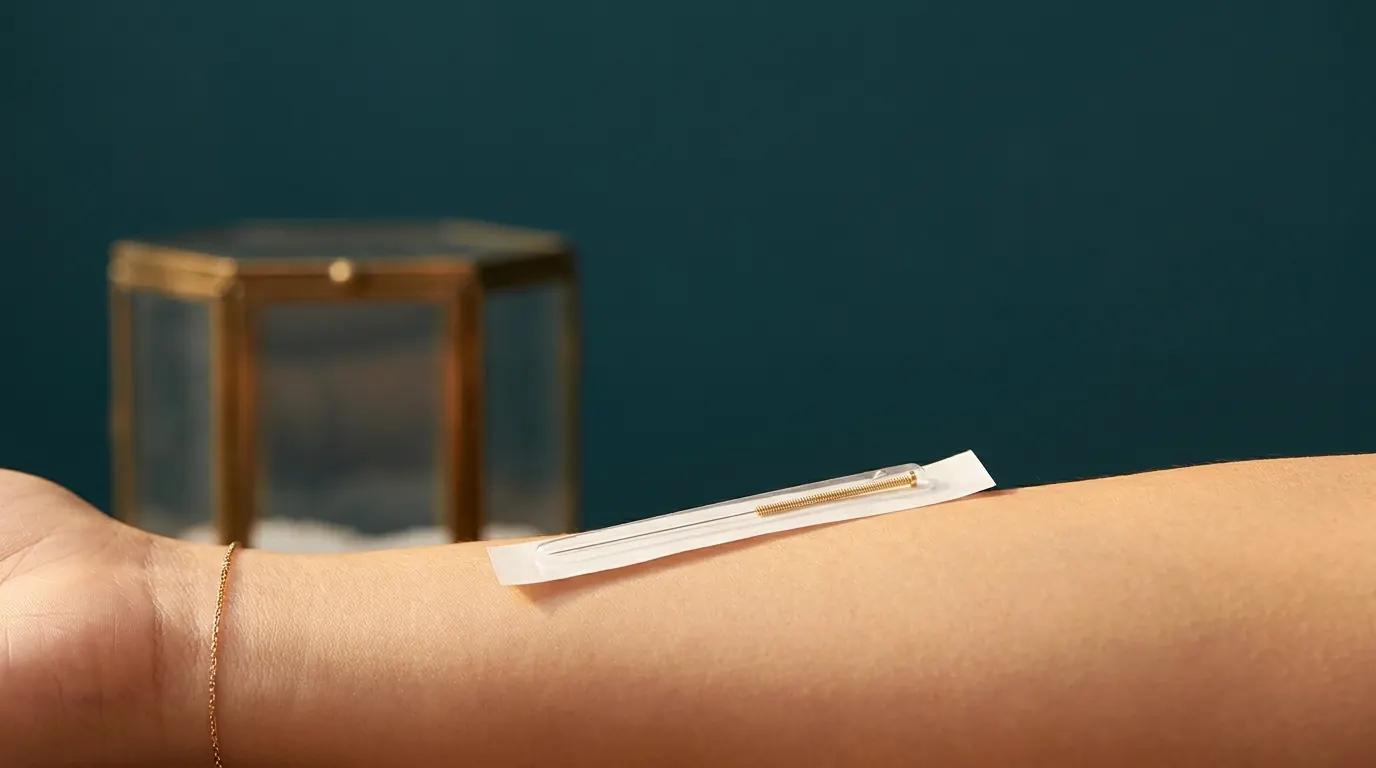
Acupuncture occupies an awkward middle position in modern medicine. The dismissive view — that it is "just placebo" — is no longer well-supported by the evidence. The evangelical view — that it treats almost any condition — has never been well-supported by the evidence. The interesting work, increasingly, sits in the middle: a growing list of conditions for which acupuncture is reliably better than nothing, plausibly better than sham, and a reasonable addition to a conventional treatment plan.
What follows is the version of this conversation we have at the clinic: a tour through what acupuncture appears to do well, what it does modestly, and where it almost certainly doesn't do what it is sometimes claimed to. We are biased only toward what the trial data actually show.
A short mechanistic detour
You don't need to believe anything about meridians or qi to take acupuncture seriously as a clinical tool. The plausible mechanisms supported by functional imaging and neurophysiology research include: local effects (microtrauma triggering anti-inflammatory and tissue-repair signalling); segmental effects (modulation of spinal-cord pain gating); central effects (activation of descending inhibitory pain pathways and shifts in functional connectivity in the limbic system and default-mode network); and autonomic effects (shifts in heart-rate variability toward parasympathetic dominance).1,2
Whether these mechanisms map onto the traditional point-and-meridian framework or not is a question for historians of medicine. The clinical question is whether the treatment produces effects that are bigger than placebo, durable, and useful. For some conditions it does; for others it doesn't.
Where the evidence is strong
Chronic low back pain
Multiple large, individual-patient-data meta-analyses (Vickers et al., 2018; updates since) consistently show acupuncture outperforms sham and no-acupuncture controls, with effects that persist for up to 12 months. Effect sizes are modest but clinically meaningful and comparable to conventional non-pharmacologic options.3
Neck pain and tension-type / chronic headache
Cochrane reviews and AHRQ comparative-effectiveness reports find clinically meaningful, lasting reductions in pain frequency and intensity. Effective both as primary care and as a prophylactic add-on to medication.4
Migraine prophylaxis
2016 Cochrane review of 22 trials concluded acupuncture is at least as effective as standard prophylactic drugs for episodic migraine, with fewer adverse effects. A reasonable first-line option for patients seeking to avoid daily medication.5
Osteoarthritis of the knee
Pooled trial data support modest, sustained reductions in pain and improvements in function. Often used alongside physical therapy and weight-management programmes.6
Where the evidence is moderate
Anxiety and stress-related symptoms
Several systematic reviews report meaningful short-term reductions in anxiety scores and physiologic stress markers (cortisol, sympathetic markers). Trial quality is variable; the signal is consistent but the effect size is modest. Best framed as an adjunct rather than a primary treatment for clinical anxiety disorders.7
Insomnia
Meta-analyses suggest improvements in sleep onset latency, total sleep time, and subjective sleep quality versus sham. Effects are real but smaller than CBT-I (the first-line non-drug treatment for chronic insomnia). Useful add-on when CBT-I isn't available or isn't sufficient.8
Post-operative and chemotherapy-induced nausea
The single condition for which the WHO and major oncology bodies clearly endorse acupuncture and acupressure (PC6 point in particular). Effect sizes comparable to antiemetic drugs in well-controlled trials.9
Sports injury recovery and overuse tendinopathies
Growing body of trials in lateral epicondylitis, plantar fasciitis and rotator cuff conditions. Effects roughly comparable to other physical modalities; usually combined with appropriate loading programmes for best results.
Where the evidence is weak or absent
Smoking cessation
Trials have not shown a clinically meaningful effect over placebo or sham. Patients seeking to stop smoking are far better served by nicotine replacement, varenicline, or behavioral support.10
Weight loss
The evidence base is small, heterogeneous, and confounded by lifestyle co-interventions. Acupuncture is not a weight-loss treatment.
Erectile dysfunction as a standalone treatment
The handful of trials are small and methodologically limited. Acupuncture may have a role for psychogenic ED as part of a broader stress-reduction strategy, but it is not a substitute for evaluating and treating the underlying vascular, hormonal or psychological drivers.
"Detox" claims
There is no plausible mechanism by which needling activates excretion of unnamed toxins, and no evidence supports it. Acupuncture is real medicine; "detox" is marketing.
How a session actually goes, in our clinic
A first visit takes 60–75 minutes. We take a full conventional medical history first — current medications, prior surgeries, imaging, what other clinicians have tried. The acupuncture intake then adds a Chinese-medicine examination (tongue, pulse) and any pattern-based observations the practitioner finds useful for selecting points. The session itself uses single-use, sterile, hair-thin filiform needles, retained for 20–30 minutes. Most patients describe the sensation as a brief, dull ache at insertion that fades within seconds.
Treatment courses are typically 6–10 sessions over 4–8 weeks, with re-evaluation at the midpoint. Patients who respond usually do so within the first 3–4 sessions; if there is no benefit by then, we change approach or refer.
Safety, briefly
In the hands of a competent practitioner using single-use sterile needles, adverse events are uncommon and almost always minor: small bruises at needling sites, brief tenderness, occasional transient lightheadedness. Serious adverse events (pneumothorax, infection) are rare and almost entirely linked to inadequately trained practitioners or non-sterile equipment.11 Asking about training credentials, hygiene, and single-use needle policy at the first call is reasonable and not rude.
How to think about adding acupuncture to your care
The most useful framing we offer patients: acupuncture is one of several reasonable tools for some specific conditions. It is rarely the only tool worth using, and it should never replace investigation of an undiagnosed symptom.
If you have a condition on the "strong evidence" list above and want a non-drug option, it is a reasonable thing to try. If you have a condition on the "weak evidence" list, your time and money are better spent elsewhere. If you don't yet have a diagnosis, get one first — acupuncture for a problem that hasn't been characterised is rarely the right starting point.